
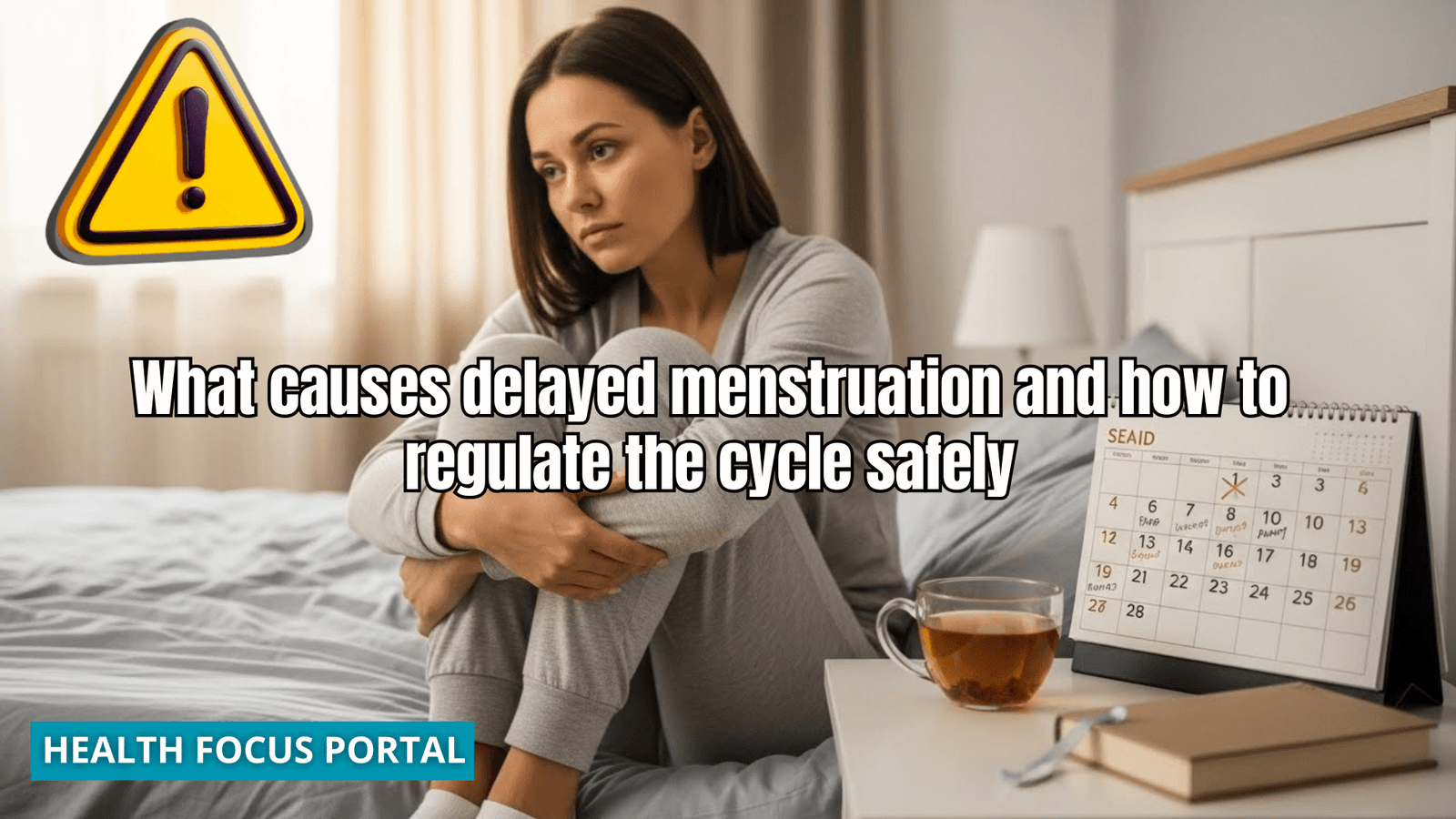
A delayed period is one of the most common concerns for people who menstruate. When the menstrual cycle does not arrive on the expected date, feelings of doubt, anxiety, fear, and even guilt often arise. Many people ask themselves what causes delayed periods, whether this situation is normal, and most importantly, how to regulate the menstrual cycle safely.
Although menstruation is a natural process, a delayed menstrual cycle is a sign that something may be happening in the body. Sometimes the delay is simple and temporary. However, in other cases, it may indicate hormonal imbalance, emotional changes, or even health conditions that require attention.
For this reason, throughout this article, you will understand the main causes of delayed periods, learn how to regulate your cycle safely and naturally, and discover when a delayed period requires medical evaluation.
What Is a Delayed Period and When Does It Happen?
A delayed period occurs when menstruation does not appear on the expected day of the cycle. In general, a healthy menstrual cycle lasts between 21 and 35 days, depending on the person. However, when menstruation is late by several days or does not come at all, concern naturally arises.
It is important to understand that a small delay can be normal. The human body does not work like a perfect clock. Still, frequent or prolonged delays indicate that the body may be experiencing some type of imbalance.
Therefore, tracking your cycle is the first step in understanding what causes delayed periods.
Main Causes of a Delayed Period
There are several reasons for a delayed menstrual cycle. Some are simple and temporary, while others require medical attention. Below, you will learn about the most common causes of delayed periods.
Emotional Stress and Delayed Periods
Stress is one of the most frequent causes of delayed periods. Situations involving anxiety, emotional pressure, family problems, or excessive workload directly affect brain function.
When you are stressed, the body releases cortisol, a hormone that interferes with the production of hormones responsible for ovulation. As a result, a delayed period can occur.
Therefore, the higher the stress level, the greater the chance of cycle irregularity.
Hormonal Changes and Irregular Menstrual Cycles
Hormonal imbalance is one of the main answers to the question what causes delayed periods. Changes in estrogen and progesterone levels directly affect ovulation.
Without ovulation, menstruation does not occur regularly. This explains why hormonal imbalance causes frequent delays, long cycles, or even missed periods.
Pregnancy as a Cause of Delayed Periods
Pregnancy is one of the most well-known causes of delayed periods. When fertilization occurs, the body pauses the menstrual cycle to support pregnancy.
For this reason, whenever a delayed period happens—especially for sexually active individuals—pregnancy should always be considered.

Birth Control Use and Delayed Periods
The use of hormonal birth control, especially when starting, stopping, or switching methods, can cause delayed periods. This happens because the body needs time to adjust to new hormone levels.
Additionally, long-term or inappropriate use of birth control can lead to irregular cycles, spotting, or missed periods.
Sudden Weight Changes and Delayed Periods
Rapid changes in body weight, whether significant weight loss or weight gain, directly affect the menstrual cycle. This happens because body fat plays a role in hormone production.
Very restrictive diets, eating disorders, and excessive exercise are factors that strongly contribute to a delayed period.
Excessive Exercise and Delayed Periods
Although physical activity is healthy, excessive intense exercise can lead to delayed periods. This is common among athletes or people who train without adequate rest.
The body enters an energy-saving mode and reduces functions considered secondary, such as reproduction.
Polycystic Ovary Syndrome and Delayed Periods
Polycystic ovary syndrome (PCOS) is one of the main causes of an irregular menstrual cycle. This condition causes hormonal imbalance, difficulty ovulating, and frequent delays.
In addition to delayed periods, PCOS may cause acne, excess hair growth, and difficulty getting pregnant.
Thyroid Disorders and Delayed Periods
Thyroid disorders, such as hypothyroidism and hyperthyroidism, directly interfere with hormonal function. As a result, the menstrual cycle may become delayed or irregular.
For this reason, frequent cycle changes should always be investigated.
How to Regulate Your Menstrual Cycle Safely
After understanding what causes delayed periods, the next step is learning how to regulate your cycle safely, respecting your body and avoiding risky solutions.
Proper Nutrition to Regulate the Menstrual Cycle
Nutrition plays an essential role in menstrual cycle regulation. Eating nutrient-rich foods helps balance hormones naturally.
Foods rich in iron, magnesium, zinc, and vitamin B6 support hormonal health. On the other hand, ultra-processed foods, excess sugar, and unhealthy fats make cycle regulation more difficult.
Therefore, a balanced diet directly helps regulate your period safely.
Quality Sleep and Menstrual Cycle Balance
Poor sleep directly affects hormones. Sleep deprivation increases cortisol levels and reduces the production of reproductive hormones.
Maintaining a consistent sleep routine is essential for those seeking to regulate their menstrual cycle naturally.
Stress Management to Prevent Delayed Periods
Since stress is one of the main causes of delayed periods, learning to manage it is crucial. Techniques such as meditation, deep breathing, and self-care help reduce emotional overload.
With lower stress levels, the body begins to function more efficiently and naturally.
Moderate Exercise Helps Regulate the Cycle
Moderate physical activity helps balance hormones and improves blood circulation.
Walking, yoga, and stretching are excellent options for those who want to regulate the menstrual cycle safely.
Herbal Teas That May Help Regulate Your Period
Some herbal teas are traditionally used to support menstrual cycle regulation. The most common include:
-
Ginger tea, which stimulates circulation
-
Cinnamon tea, associated with cycle regulation
-
Chamomile tea, which reduces stress
-
Fennel tea, which supports hormonal balance
These teas may help, but they should always be consumed with moderation.
The Danger of Trying to “Force” Your Period
Many people resort to dangerous methods to force menstruation. These include improper medication use, extreme home remedies, or toxic substances.
These practices are dangerous and may cause bleeding, infections, and serious health damage. For this reason, regulating your cycle safely is always the best choice.

When a Delayed Period Is a Cause for Concern
Not every delayed period is serious, but some warning signs require medical attention:
-
Frequent delays over several months
-
Complete absence of menstruation
-
Intense pain along with the delay
-
Irregular bleeding
-
Pregnancy suspicion
-
History of hormonal disorders
In these cases, seeing a healthcare professional is essential.
The Importance of Gynecological Follow-Up
Regular gynecological care helps identify the cause of a delayed period and guides appropriate treatment.
Every body is unique, and only a professional can recommend the safest approach.
Conclusion: Understanding Your Body Is the First Step
A delayed period is a sign that should not be ignored. Understanding what causes delayed periods and learning how to regulate your cycle safely are essential steps toward protecting both physical and emotional health.
With healthy habits, stress awareness, balanced nutrition, and proper medical care, it is possible to maintain a more regular and healthier menstrual cycle.
Your body speaks. Listen carefully.