
We are living in an era where new diseases, new infections, new viruses, and new global health threats are emerging faster than ever before. Because of this, understanding how the world is fighting new diseases has become not just important, but essential for our collective survival. Although technology is advancing rapidly, humanity STILL faces enormous challenges. However, the good news is that the world is actively fighting new diseases with powerful, innovative, and truly transformative strategies.
This mega guide will explain — in a human, simple, educational, deep, engaging, and highly informative way — exactly how the world is fighting new diseases, while breaking down the latest global health news, their causes, impacts, and the real strategies shaping the future of global health.
You’ll notice smooth transitions, strategic keyword repetition for SEO, and impactful bold highlights to support clarity and emotional connection.
The accelerated evolution of new diseases around the world
We are witnessing an increase in the emergence of new diseases. But why is this happening?
First, because the world is more interconnected than ever. Globalization allows a virus to travel across continents in just a few hours. Additionally, climate change is altering ecosystems worldwide, enabling viruses, fungi, and bacteria to thrive in places where they previously could not survive. Because of this, understanding how the world is fighting new diseases is essential for protecting humanity.
Furthermore, modern lifestyle changes, increasing urban density, and more frequent contact with wild animals significantly increase the chances of new infectious diseases emerging. Therefore, it is no surprise that every year global health agencies report global health news involving emerging outbreaks, health alerts, and newly discovered infections.
How the world is fighting new diseases with advanced technology
One of the most impressive aspects of how the world is fighting new diseases involves technology. Advanced tools enable faster, more precise, and more effective responses.
Genetic mapping
Through advanced genetic sequencing, scientists can identify new diseases in just days — something that used to take months. This is essential because faster identification means faster vaccine development, faster treatment creation, and faster containment strategies.
Artificial Intelligence in global health
Artificial intelligence is now being used to predict outbreaks, track disease patterns, and even assist in designing potential treatments. Because of this, AI is a critical part of how the world is fighting new diseases today.
Telemedicine
Telemedicine has also revolutionized the healthcare system. It increases access to medical care, speeds up diagnostics, and reduces hospital overload during outbreaks. This directly supports the global fight against new diseases.

The importance of vaccines in global health news
When we talk about how the world is fighting new diseases, vaccines unquestionably deserve attention. Vaccines are one of humanity’s greatest scientific achievements.
New vaccine technologies
mRNA vaccines have drastically changed the world’s response to new diseases. They allow for safer, faster, and more flexible vaccine development.
Additionally, researchers are now investing in universal vaccines, designed to protect against multiple virus mutations — a revolutionary step in the fight against constantly evolving pathogens.
Vaccines remain one of the strongest tools in the fight against new diseases, helping reduce transmission, prevent severe symptoms, and save millions of lives.
International cooperation: how countries unite to fight new diseases
No country can fight new diseases alone. International collaboration is crucial.
Organizations such as:
-
The World Health Organization (WHO)
-
The United Nations (UN)
-
CDC Global Health Programs
-
Worldwide epidemiological surveillance coalitions
work together to share data, monitor outbreaks, fund scientific research, deploy emergency teams, and distribute vaccines.
This global cooperation demonstrates clearly how the world is fighting new diseases in a collective and coordinated way.
The role of global health news in protecting the population
Information is one of the most powerful weapons against new diseases. When people receive accurate, updated, and trusted information, they become better prepared to protect themselves.
Global health news helps:
-
warn communities about new outbreaks
-
inform the public about early symptoms
-
educate about available treatments
-
update travel safety alerts
-
share prevention strategies
That is why following global health news is essential for anyone who wants to stay safe and informed.

Climate change and its direct impact on the rise of new diseases
Climate change is one of the biggest drivers behind the emergence of new diseases. Higher temperatures allow viruses, mosquitoes, fungi, and bacteria to survive in new geographic areas.
Examples include:
-
dengue appearing in colder countries
-
new mosquito species emerging in urban centers
-
disease spread after floods and natural disasters
-
ancient viruses emerging from melting ice in the Arctic
Because of this, climate change is now considered a major global health risk factor.
How the world is fighting new diseases through health education
Education is one of the most effective tools for preventing new diseases. When people understand how diseases spread, prevention becomes easier and faster.
Global educational campaigns teach:
-
proper hand washing
-
the importance of vaccines
-
how to avoid contaminated water
-
respiratory infection prevention
-
safe antibiotic use
Health education empowers people to take control of their own well-being and contributes to a stronger global response.
The vital role of epidemiological surveillance systems
To stop a disease, experts must know where it started and how it’s spreading. That is why epidemiology is essential in understanding how the world is fighting new diseases.
Surveillance systems help:
-
detect outbreaks early
-
track mutations
-
monitor transmission patterns
-
support emergency response decisions
-
guide global prevention strategies
Many outbreaks are stopped BEFORE they become global crises thanks to these systems.
The rise of preventive medicine and its impact on global health
Preventive medicine has transformed how the world is fighting new diseases. Instead of reacting to a crisis, the focus is now on avoiding the crisis altogether.
This includes:
-
regular health screenings
-
rapid diagnostic tests
-
nutritional guidance
-
mental health support
-
vaccination programs
-
antimicrobial resistance control
As preventive medicine evolves, society becomes better protected from new diseases.
The importance of simple everyday measures
Even with advanced technology, some of the most effective tools for fighting new diseases are incredibly simple:
-
washing hands
-
improving ventilation
-
wearing masks when sick
-
avoiding crowded places during outbreaks
-
safe food handling
-
proper hydration and hygiene
Small actions can prevent massive outbreaks.
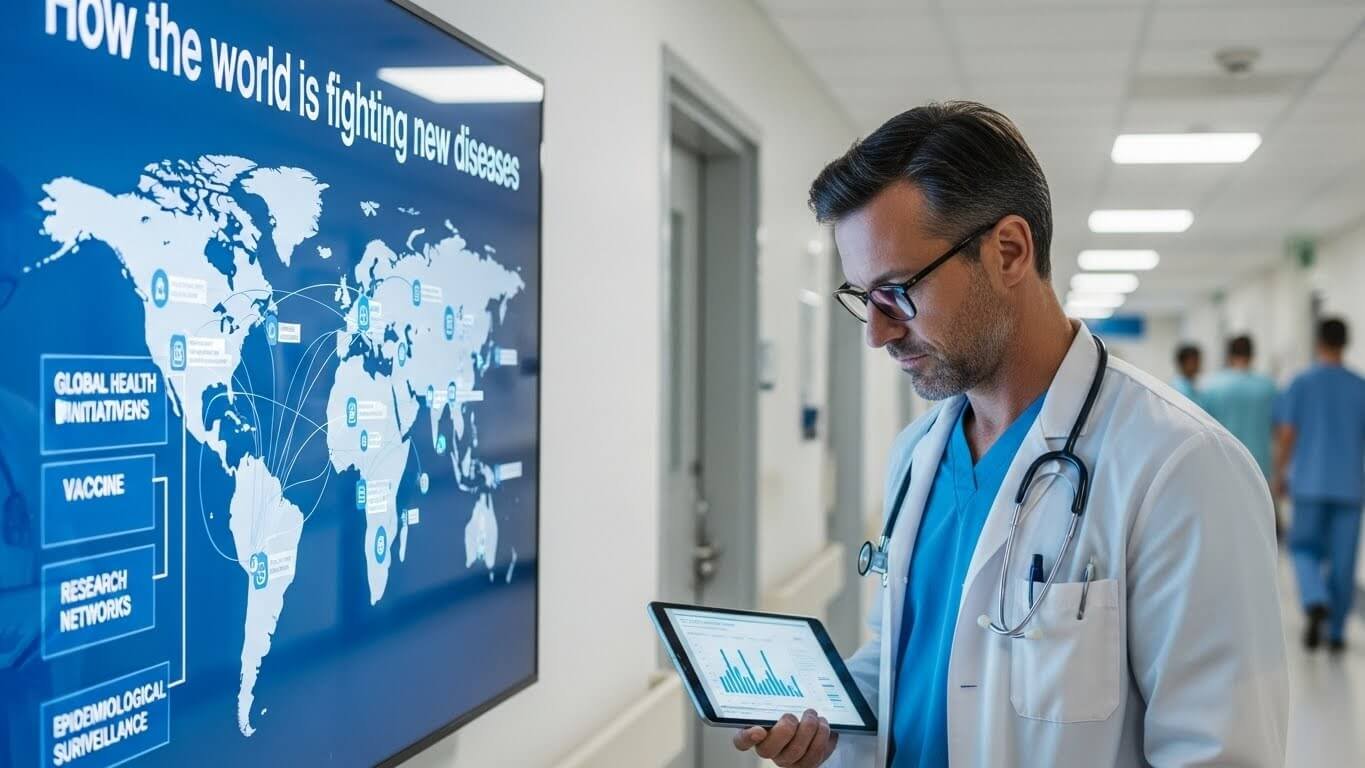
How individuals influence the global fight against new diseases
Individual responsibility is a huge part of how the world is fighting new diseases. A single informed and responsible person can prevent dozens — or even hundreds — of potential transmissions.
Therefore, public participation is absolutely essential.
Conclusion: the future of global health depends on all of us
After exploring in depth how the world is fighting new diseases, it becomes clear that we are living in an era of tremendous challenges — but also tremendous innovation. Technology, vaccines, international cooperation, surveillance systems, and health education play critical roles in protecting humanity.
However, the fight against new diseases is not only the responsibility of governments. It is a shared mission. Every individual, family, community, and nation contributes directly to the future of global health.
If we continue supporting science, prevention, and responsible behavior, the world will be better prepared not only for the new diseases of today — but also for the ones that may emerge in the future.