

Why Eating Oatmeal Every Day Can Transform Your Health
Including oatmeal for breakfast every day is one of the simplest and most powerful habits you can adopt to improve your well-being. This whole grain is rich in fiber, vitamins, minerals, and antioxidants, which is why it’s considered one of the most nutritious and complete foods to start your morning. Additionally, it’s affordable, versatile, and easy to prepare, making it ideal for anyone who wants to build a healthier routine.
Throughout this article, you’ll learn the main benefits of eating oatmeal every day, why it’s so important for digestion, weight loss, heart health, and energy levels, and how you can easily include it in your daily meals. As you continue reading, you’ll also understand how this simple morning meal can make a big difference in your long-term health.

What Makes Oatmeal So Nutritious?
1. Fiber-Rich, Especially in Beta-Glucan
One of the greatest health benefits of oatmeal comes from its high amount of soluble fiber, especially beta-glucan. This type of fiber helps reduce cholesterol, stabilizes blood sugar levels, and supports digestion.
Because beta-glucan forms a gel-like substance in the stomach, it provides a longer feeling of fullness. That’s why having oatmeal for breakfast every day can help you stay satisfied for hours and avoid unnecessary snacking.
2. A Natural Source of Vitamins and Minerals
Oatmeal is rich in essential nutrients, including:
-
Iron
-
Magnesium
-
Zinc
-
Phosphorus
-
Vitamin B1 (Thiamine)
-
Antioxidants like avenanthramides
These nutrients give your body the energy and protection it needs throughout the day.
3. High-Quality Plant Protein
Besides fiber, oats also provide good amounts of plant-based protein, which supports muscle recovery and helps maintain strength, especially when consumed daily.
The Top Benefits of Eating Oatmeal Every Morning
1. Improves Digestion and Gut Health
Eating oatmeal for breakfast every day is extremely beneficial for your digestive system. Because oatmeal is rich in fiber, it helps regulate bowel movements and prevents constipation.
Moreover, the prebiotics in oats help feed the good bacteria in your gut, improving nutrient absorption and overall digestive health.
2. Helps With Weight Loss Naturally
If your goal is to lose weight, oatmeal can be your greatest ally. Thanks to its fiber content, it promotes satiety and reduces cravings. As a result, you eat fewer calories throughout the day—without even trying.
Additionally, oats help control blood sugar levels, which prevents spikes that lead to hunger and overeating.
3. Protects Heart Health
Another important benefit of eating oatmeal every day is its impact on heart health. The beta-glucan fiber helps reduce LDL (“bad cholesterol”) while preserving HDL (“good cholesterol”). As a result, the daily consumption of oats lowers the risk of:
-
Heart disease
-
Stroke
-
High blood pressure
And because oats are naturally rich in antioxidants, they also help reduce inflammation in the body.
4. Boosts Energy and Improves Mood
Starting your day with oatmeal provides slow-releasing carbohydrates, which deliver steady energy throughout the morning. This means:
-
More focus
-
More productivity
-
Less fatigue
Plus, oats contain B vitamins, which play an important role in mood regulation and brain function.
5. Supports Skin Health
Because of their anti-inflammatory and antioxidant properties, oats help improve the appearance of the skin from the inside out. Regular consumption can help reduce symptoms of irritation and dryness and keep the skin healthier and more nourished.
6. Stabilizes Blood Sugar Levels
Oatmeal has a low glycemic index, meaning it releases glucose slowly into the bloodstream. This benefits:
-
People with diabetes
-
Those at risk of developing diabetes
-
Anyone who wants to avoid sugar spikes
Eating oatmeal for breakfast every day helps maintain stable energy levels and reduces cravings for sweets.

How to Include Oatmeal in Your Daily Routine (Easy and Delicious Options)
1. Traditional Cooked Oatmeal
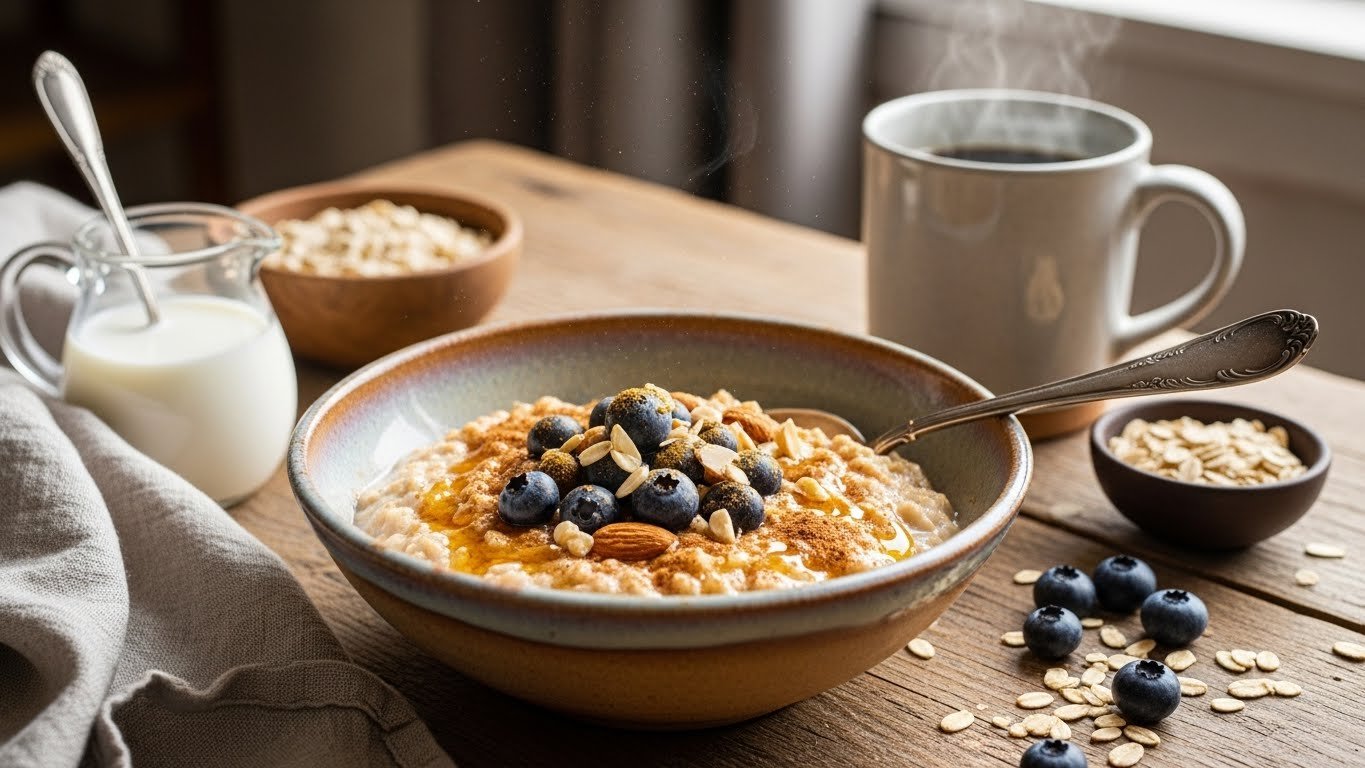
This is the classic and easiest method. Simply cook oats with water or milk and customize with toppings such as:
-
Banana
-
Strawberry
-
Honey
-
Nuts
-
Peanut butter
2. Overnight Oats (No Cooking Needed)
A popular option for those with busy mornings. Just mix oats with yogurt or milk the night before and let it rest in the refrigerator. In the morning, it’s ready to eat.
3. Smoothies With Oatmeal
Adding a scoop of oats to your smoothie makes the drink more nutritious and filling. It’s perfect for those who prefer a quick breakfast.
4. Pancakes or Waffles Made With Oat Flour
Blend the oats into flour and prepare healthier pancakes or waffles. This is a great way to enjoy a delicious breakfast with all the benefits of oats.
 Why You Should Eat Oatmeal Every Day: Final Considerations
After understanding the benefits of eating oatmeal for breakfast every day, it’s easy to see why this food is so recommended by nutritionists. Oatmeal improves digestion, supports weight loss, protects the heart, increases energy, and strengthens the immune system.
In addition, oatmeal is practical, inexpensive, and extremely versatile. You can prepare it in different ways, ensuring variety while maintaining the habit consistently.
If your goal is to live healthier, have more energy, or improve your diet, making oatmeal part of your mornings is one of the best decisions you can make.
Conclusion: A Simple Habit That Brings Powerful Results
Including oatmeal for breakfast every day is an easy and effective change that transforms your health in the short and long term. Because oatmeal is rich in fiber, vitamins, minerals, and antioxidants, it improves digestion, supports weight control, provides energy, and protects the heart.
Therefore, if you want a practical, tasty, and nutritious way to improve your mornings, choose oatmeal. By making this small daily change, you’ll be investing in your well-being and quality of life.